
CALL US TODAY FOR BEST PRICES, FAST QUOTES AND GREAT DISCOUNTS: 1300 404 226
CALL FOR BEST PRICES: 1300 404 226
Skip to content

Filters

Restoration Equipment

Restoration jobs don't wait. Whether it's water damage, mould remediation, or ongoing air quality control, having the right equipment on site from the start determines how quickly and cleanly the job gets done. We stock a full range of professional restoration equipment including brands like Xpower and Thorair — dehumidifiers, air movers, air purifiers, and fogging units, suited to everything from single room remediation through to large-scale commercial and industrial restoration work across Australia. Give us a call if you need help speccing the right combination of equipment for your job.

Understanding the Restoration Equipment Workflow

Effective restoration work follows a sequence — extract, dry, purify, treat. Each stage requires different equipment, and running them in the right order determines how much secondary damage occurs and how fast the space is returned to use. Getting the combination right matters more than any individual machine.

Dehumidifiers

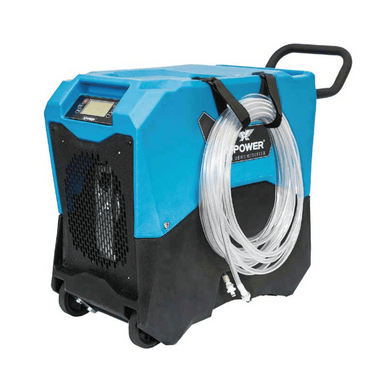
The foundation of any water damage drying operation. Dehumidifiers pull moisture from the air as evaporation occurs, which is what drives the actual drying of structural materials. Without adequate dehumidification, air movers simply move humid air around without achieving meaningful moisture removal. The XPOWER 85L and 165L LGR dehumidifiers are commercial-grade units built for restoration contractor use — LGR (Low Grain Refrigerant) technology extracts moisture more efficiently at lower humidity levels than standard refrigerant units, which matters in the later stages of drying when ambient humidity has already dropped. The Thorair 50L, 70L, and 90L dehumidifiers offer a well-priced alternative range for contractors who need reliable commercial capacity without the LGR specification.

Air Movers

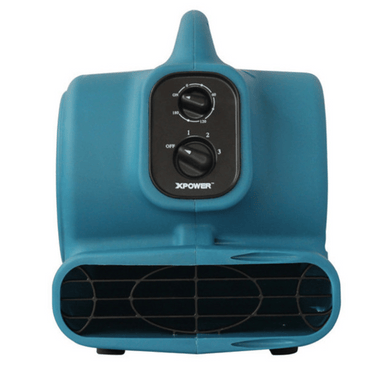
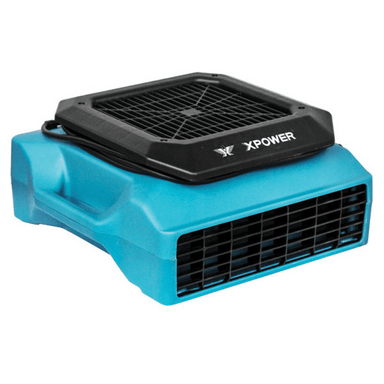
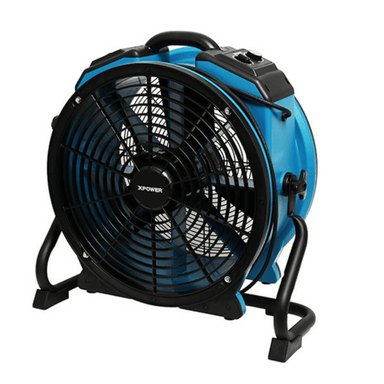
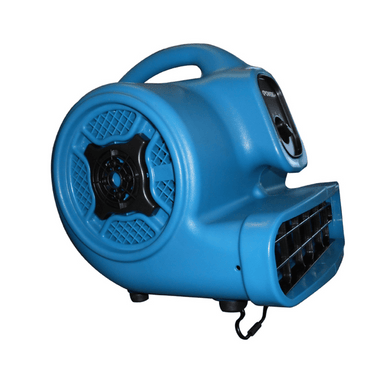
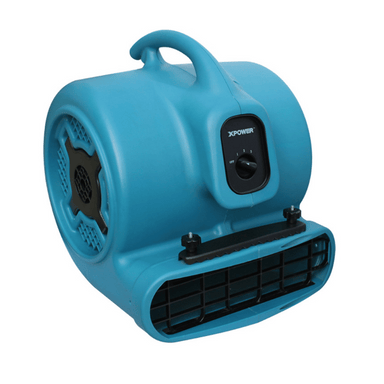
Air movers accelerate evaporation by moving high-velocity air across wet surfaces — floors, walls, subfloors, and carpets. They work in combination with dehumidifiers: the air mover drives moisture into the air, the dehumidifier removes it. Multiple air movers running simultaneously across a water-damaged space significantly reduces drying time compared to passive drying. The XPOWER range covers compact low-profile models (PL-700A), standard axial air movers (X-400, X-800C), and the high-output Turbo-Pro X-47ATR — suited to everything from single rooms through to large commercial flood events. The X-800HC adds wheels for easy repositioning across large spaces.

Wall Cavity Dryers

Standard air movers dry exposed surfaces — but moisture trapped inside wall cavities, under skirting boards, and between structural elements requires a different approach. The XPOWER Viking Pressurised Wall Cavity Dryer injects high-velocity air directly into wall cavities through small access holes, drying structural timber and insulation from the inside without requiring demolition. On water damage jobs where cavity moisture is left untreated, mould growth follows within days.

Air Scrubbers and HEPA Air Purifiers

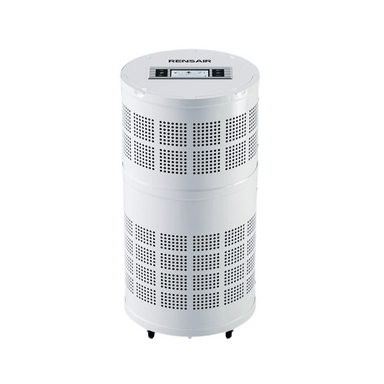
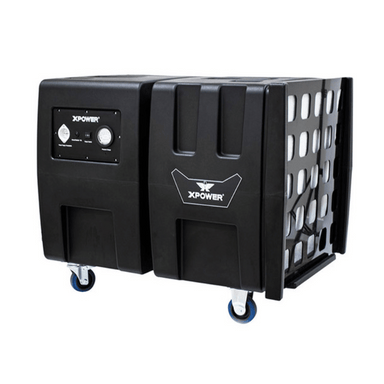
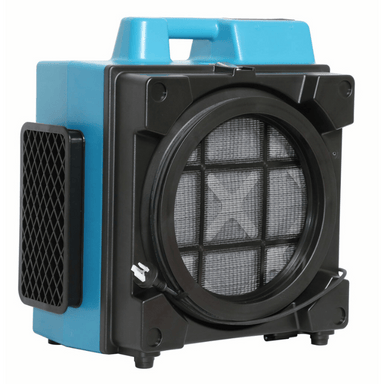
Air scrubbers and purifiers serve two roles in restoration — removing airborne particulates (mould spores, dust, demolition debris) during active remediation work, and purifying air quality in the space once the physical work is complete. The XPOWER X-3400 is a HEPA filtered air scrubber suited to mould remediation and construction environments. The Xpower AP2000 handles high-volume air scrubbing for larger commercial spaces. The Rensair Q01B is a hospital-grade H14 HEPA unit positioned for ongoing air quality in occupied commercial environments — schools, aged care, and healthcare — rather than active remediation sites.

Fogging and Disinfection Equipment

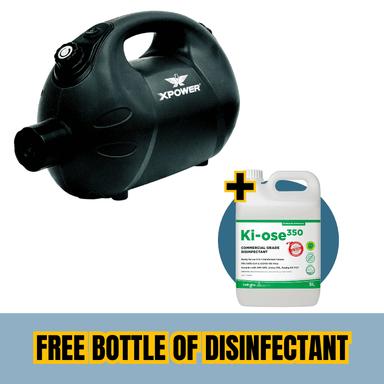
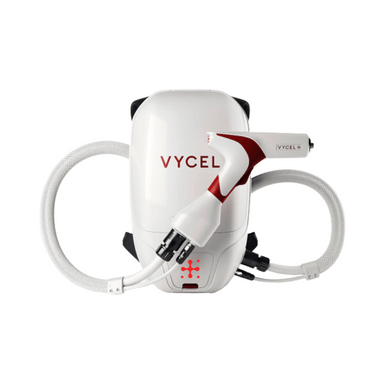
ULV (Ultra Low Volume) cold foggers and electrostatic sprayers apply disinfectants, sanitisers, and mould treatments to large surface areas efficiently. The XPOWER F16B Battery Powered ULV Cold Fogger is the cordless option — useful in spaces without reliable outlet access or where mobility matters. The Motorscrubber Storm Wand Backpack Sprayer handles targeted disinfection and surface treatment on restoration sites.

Frequently Asked Questions — Restoration Equipment

How many air movers and dehumidifiers do I need for a water damage job?

The general industry rule is one air mover per 10–15m² of affected floor area, with dehumidifier capacity matched to the total air volume of the space. In practice, the severity of saturation, the structural materials involved, and ambient conditions all affect the right setup. For a standard residential room, 3–4 air movers and a 50–70L dehumidifier is a common starting configuration. For larger commercial spaces or heavy saturation events, give us a call and we'll help you work through the equipment requirements before you commit to a hire or purchase.

What is the difference between an LGR dehumidifier and a standard commercial dehumidifier?

Standard refrigerant dehumidifiers work efficiently down to around 40–50% relative humidity, then lose performance as the air becomes drier. LGR (Low Grain Refrigerant) dehumidifiers use a pre-cooling process to extract moisture more efficiently at lower humidity levels — continuing to pull meaningful water from the air even when ambient humidity has already dropped significantly. For restoration drying, where the goal is to drive structural moisture content down to acceptable levels, LGR units complete the job faster and more thoroughly. The XPOWER 85L and 165L are LGR units.

When do I need an air scrubber on a restoration job?

Whenever airborne particulates are a concern — active mould remediation, demolition of water-damaged materials, sewage-affected areas, or any space where contamination has become airborne. Air scrubbers filter the air continuously during the work, protecting both operators and the surrounding environment from cross-contamination. For mould remediation specifically, running an air scrubber with HEPA filtration is standard practice and often a requirement under remediation protocols. The XPOWER X-3400 and AP2000 are the appropriate units for active remediation work.

Can I use restoration equipment for preventive air quality management rather than just remediation?

Yes — dehumidifiers, air purifiers, and air scrubbers are used in ongoing facility management as well as active remediation. Keeping relative humidity below 60% in vulnerable spaces (basements, server rooms, storage areas, commercial kitchens) prevents mould growth before it starts. The Rensair Q01B is specifically positioned for ongoing air purification in occupied commercial environments. If you're managing air quality in a healthcare, aged care, or school setting rather than responding to a damage event, the Rensair and XPOWER purifier range is the relevant product category.


Aussie Wide Shipping

Fast and competitive

Lifetime Support

Product lifetime support

Spare Parts

We source spare parts

Buying in Bulk?

Request a quote