
CALL US TODAY FOR BEST PRICES, FAST QUOTES AND GREAT DISCOUNTS: 1300 404 226
CALL FOR BEST PRICES: 1300 404 226
Skip to content

Filters

Fire and Smoke Damage Restoration Equipment

Fire and smoke damage restoration is a multi-stage process — and each stage needs the right equipment. Smoke odours penetrate deeply into surfaces and air, soot and particulates need careful containment, and indoor air quality needs to be restored before a space is safe to occupy again. We stock professional fire and smoke restoration equipment including ozone generators, air scrubbers, thermal foggers, and HEPA vacuums used by restoration contractors and specialist cleaners across Australia. Not sure how to kit out for a specific job? Give us a call and we'll help you spec the right combination.

Fire and Smoke Damage Restoration — Equipment for Each Stage

Fire and smoke damage restoration follows a different sequence to water damage restoration. The primary challenges are airborne soot and particulates during cleanup, smoke odour penetration into structural materials and soft furnishings, and restoring air quality to a safe standard before re-occupancy. Getting the equipment sequence right determines both the safety of the work and the quality of the outcome.

Stage 1 — HEPA Air Scrubbing and Containment

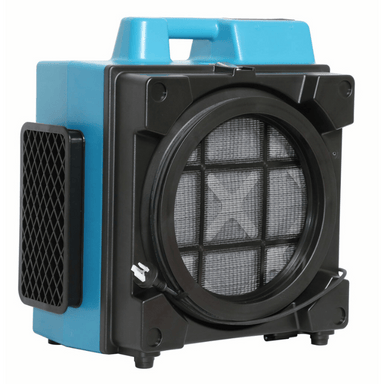
Before any physical cleanup begins, air scrubbers with HEPA filtration establish negative air pressure in the affected area — preventing smoke particles and soot from migrating into unaffected areas of the building. Soot particles are fine enough to travel through standard building air pathways and settle on surfaces throughout a property well beyond the fire-affected area. HEPA air scrubbers running continuously during the cleanup capture these particles before they spread. H14 HEPA filtration — capturing 99.995% of particles at 0.3 microns — is the appropriate specification for smoke and soot particle sizes. The XPOWER AP2000 and X-3400 in this collection cover small to large commercial restoration applications.

Stage 2 — Physical Cleanup and Soot Removal

HEPA-filtered vacuums are essential for soot removal — standard vacuums exhaust fine soot particles back into the air rather than capturing them. Sealed HEPA filtration systems ensure captured soot stays captured. Wet and dry vacuums with HEPA filtration handle both dry soot deposits and wet residue from fire suppression systems. PPE including respiratory protection — minimum P2, preferably a PAPR — is required for operators working in soot-contaminated environments.

Stage 3 — Odour Neutralisation with Ozone

Smoke odour penetrates porous materials — wall cavities, timber, insulation, soft furnishings, and upholstery — at a molecular level. Masking agents and surface cleaning don't address this. Ozone generators produce O3 which reacts with and breaks down odour-causing molecules on contact, including smoke compounds embedded in structural materials. The space must be completely vacated during ozone treatment — ozone at effective concentrations is harmful to humans, animals, and some materials including rubber seals and certain fabrics. Treatment duration depends on ozone output and space volume. After treatment, the space requires full air-out before re-entry.

Stage 4 — Thermal Fogging

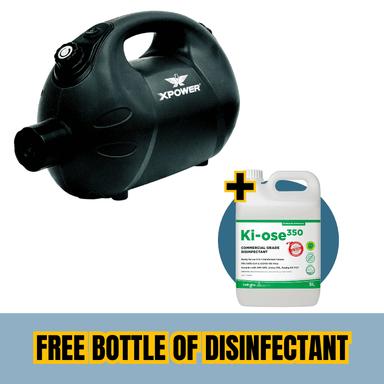
Thermal foggers apply solvent-based deodorising agents as a fine vapour that penetrates into the same porous materials that smoke odour has reached. The thermal fogging process follows the same pathways as smoke — into wall cavities, under flooring, and into soft furnishings — neutralising odour at the source rather than masking it at the surface. Thermal fogging is typically used in combination with ozone treatment rather than as a standalone odour control method for severe smoke damage.

Stage 5 — Post-Restoration Air Quality

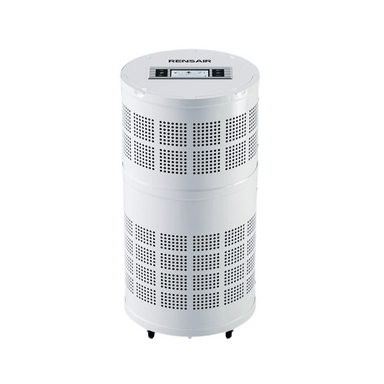
Once physical cleanup and odour treatment are complete, HEPA air purification running continuously restores indoor air quality to a safe standard before re-occupancy. The Rensair Q01B with H14 HEPA and UV-C treatment is the correct ongoing solution for occupied spaces. For commercial and healthcare environments with re-occupancy obligations, air quality monitoring confirms when the space meets the required standard.

Frequently Asked Questions — Fire and Smoke Damage Restoration Equipment

Why do I need HEPA filtration for fire and smoke cleanup?

Soot particles from fire and smoke damage are extremely fine — well within the size range that standard vacuum filtration exhausts back into the air rather than capturing. This means using a standard vacuum on soot contamination actively redistributes the particles throughout the space. HEPA-filtered vacuums with sealed filtration systems capture and retain soot particles rather than exhausting them. For air scrubbers, HEPA filtration captures airborne smoke particles during the cleanup process, preventing them from migrating into unaffected areas of the building.

What is the difference between ozone treatment and thermal fogging for smoke odour?

Ozone treatment produces O3 gas that circulates through the space and reacts with odour molecules at a molecular level, breaking them down. It's effective for airborne odour and odour in surface-accessible areas. Thermal fogging applies a fine vapour of deodorising agent that penetrates into the same porous materials the smoke reached — wall cavities, timber, insulation, and soft furnishings. For severe smoke damage, both methods are typically used in combination for comprehensive odour neutralisation. Both require the space to be vacated during treatment.

What PPE is required for fire and smoke damage restoration?

Fire and smoke damage environments involve fine soot particulates, potential chemical contamination from burnt synthetic materials, and structural hazards. At minimum, operators require disposable coveralls, nitrile gloves, eye protection, and respiratory protection rated for fine particulate and chemical hazards — P2 minimum, P3 or a PAPR for more contaminated environments. Refer to Safe Work Australia guidance on hazardous work environments and conduct a site-specific hazard assessment before commencing work. The JSP Powercap Infinity PAPR in our PPE range provides TH3-rated protection appropriate for high-contamination restoration environments.

Can I put together a fire and smoke restoration kit from your range?

Yes — we stock the core equipment categories for fire and smoke restoration including HEPA air scrubbers, HEPA-filtered wet and dry vacuums, ozone generators, thermal foggers, and respiratory PPE. The right combination depends on the scale of the damage and the specific contamination. Give us a call and we can discuss your requirements and put together the right kit before you order.


Aussie Wide Shipping

Fast and competitive

Lifetime Support

Product lifetime support

Spare Parts

We source spare parts

Buying in Bulk?

Request a quote