

Save $249.00
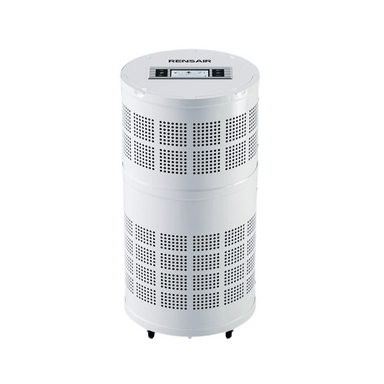
Rensair Q01B Hospital Grade HEPA Air Purifier
Clean air isn't a luxury — it's a necessity in shared indoor environments. The RENSAIR Q01B combines hospital-grade H13 HEPA filtration with a buil...
View full detailsAir purifiers and air scrubbers aren't the same thing — and choosing the wrong one for the job makes a real difference. Air scrubbers are built for active contamination control on worksites — capturing dust, mould spores, and VOCs during construction, renovation, or water damage restoration. Air purifiers are better suited to ongoing air quality management in occupied spaces like aged care facilities, offices, and healthcare settings.
We stock portable, high-airflow units with HEPA and activated carbon filtration from XPOWER and Rensair, dispatched Australia-wide with expert support from our team. Not sure which unit suits your application or what CFM rating you need? Give us a call before you decide.
Save $249.00
Clean air isn't a luxury — it's a necessity in shared indoor environments. The RENSAIR Q01B combines hospital-grade H13 HEPA filtration with a buil...
View full details
Save $-3,750.00
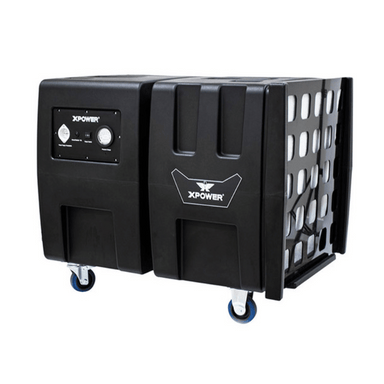
The XPOWER AP-2000 is a serious commercial air scrubber built for large-scale air purification in demanding environments. Contractors, restoration ...
View full details
Save $200.00
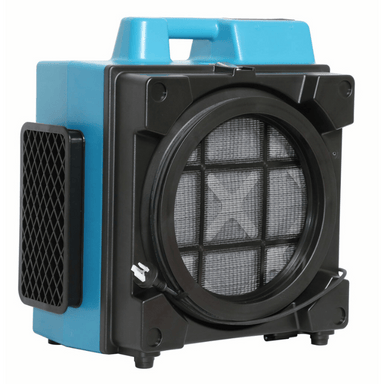
The XPOWER X-3400 is a compact 650 CFM air scrubber built for smaller restoration jobs, single-room air purification, and job sites where the AP200...
View full details
Save $30.00
Eliminate odour with the powerful H35 HEPA Filter The XPOWER HEPA Filter H35 is designed to be used in conjunction with the CF35 Carbon Filter in t...
View full detailsThe terms are often used interchangeably but they describe machines designed for different purposes. Getting clear on which one you actually need before purchasing saves time and money — and ensures the machine you buy does the job it's being asked to do.
Air scrubbers are engineered for worksites where active contamination is being generated — construction dust, demolition debris, mould spores during remediation, VOCs during painting or flooring work, and airborne particulates during water damage restoration. They draw large volumes of air through multi-stage filtration including HEPA and activated carbon, capturing contaminants before they settle on surfaces or are inhaled by workers and occupants.
The defining feature of a professional air scrubber is high CFM output — the volume of air the machine can process per minute. A unit with insufficient CFM for the space it's working in won't achieve the air changes per hour needed to control contamination effectively. For worksite use, the general guide is four to six air changes per hour for standard contamination, and up to twelve for mould remediation and high-hazard environments. Matching CFM to room volume is the first calculation before selecting a unit.
Air scrubbers are also used in negative air pressure setups — ducted to exhaust contaminated air outside the work area while maintaining negative pressure inside, preventing contaminants from spreading to adjacent clean areas. Not all air scrubbers support duct-able exhaust — check this before purchasing if negative air pressure is part of your protocol.
Air purifiers are designed for continuous operation in occupied spaces where the goal is maintaining clean air quality over time rather than controlling active contamination. Aged care facilities, hospitals, schools, offices, and commercial buildings with air quality requirements are the most common applications. The Rensair system is the standout in this category — it combines H14 HEPA filtration with UV-C disinfection, which neutralises trapped biological pathogens rather than simply capturing them. This makes it particularly suited to healthcare and aged care environments where airborne infection control is a genuine operational requirement rather than a preference.
For ongoing air quality management, the key specifications are filtration level, noise level for occupied spaces, and energy consumption for continuous operation. A machine running 24 hours a day needs to be quiet enough not to disturb occupants and efficient enough not to create a meaningful ongoing energy cost.
Both H13 and H14 are HEPA standards but they're not the same. H13 HEPA captures 99.95% of particles at 0.3 microns — appropriate for most commercial applications including offices, schools, and general healthcare settings. H14 HEPA captures 99.995% — ten times more efficient at the same particle size. For environments with immunocompromised patients, high-risk infection control requirements, or where the highest available filtration standard is a compliance requirement, H14 is the appropriate specification. The Rensair unit in our range carries H14 certification.
Not sure whether you need an air scrubber or purifier, or which CFM rating suits your space? Give us a call on 1300 404 226 and we'll help you work it out before you order.
Air scrubbers are built for active contamination control on worksites — high CFM output, multi-stage filtration, and often ductable for negative air pressure setups during construction, mould remediation, and water damage restoration. Air purifiers are designed for continuous operation in occupied spaces where the goal is maintaining clean background air quality over time — aged care, healthcare, offices, and schools. Both use HEPA filtration but serve different purposes and are sized differently for their applications.
CFM determines how many air changes per hour a unit can achieve in a given space. The calculation is: room volume in cubic feet divided by CFM equals minutes per air change — multiply to get air changes per hour. For standard commercial air quality management, four to six air changes per hour is the general guide. For mould remediation and high-hazard environments, six to twelve air changes per hour is the professional standard. Give us your room dimensions and application and we'll help you calculate the right CFM before you order.
H13 HEPA captures 99.95% of particles at 0.3 microns — appropriate for most commercial applications including offices, schools, and general healthcare settings. H14 HEPA captures 99.995% at the same particle size — ten times more efficient. For environments with immunocompromised patients, high-risk infection control requirements, or where the highest filtration standard is a compliance requirement, H14 is the appropriate specification. The Rensair unit in our range carries H14 certification.
Negative air pressure is a containment technique where an air scrubber is ducted to exhaust air outside the contaminated work area, creating lower pressure inside than in surrounding spaces. This prevents contaminated air from spreading to adjacent clean areas when doors or barriers are opened. For mould remediation, asbestos removal, and any high-contamination worksite adjacent to occupied spaces, negative air pressure is considered standard professional practice. Not all air scrubbers support ductable exhaust — confirm this before purchasing if negative pressure setups are part of your protocol.
The Rensair combines H14 HEPA filtration with integrated UV-C disinfection — the UV-C light neutralises biological pathogens trapped in the filter rather than simply capturing them. This is a meaningful difference in healthcare, aged care, and any environment where airborne infection control is a genuine operational requirement. Standard HEPA purifiers capture particles but don't inactivate them — pathogens remain viable on the filter. The Rensair's UV-C component addresses this directly. It's also a hospital-grade unit designed for continuous 24-hour operation in occupied clinical and care environments.
Air purifiers with HEPA filtration capture airborne mould spores and reduce their concentration in the air — which helps manage symptoms and reduce spore spread in spaces where mould is present. However, an air purifier is not a substitute for mould remediation. It manages airborne spores in occupied spaces while remediation is pending or ongoing, but it does not address the source. For active mould remediation work, an air scrubber in negative air pressure mode is the appropriate tool. For post-remediation ongoing air quality management, an air purifier is appropriate.
Filter replacement frequency depends on the application and operating hours. In high-contamination worksite environments — active construction, mould remediation, flood restoration — filters load significantly faster than in general office or healthcare use. Most manufacturers provide replacement intervals based on operating hours and contamination level. Running a machine past its filter replacement interval reduces filtration efficiency and can damage the motor. We stock replacement filters for the units in our range — give us a call with your model and operating conditions and we'll advise on appropriate replacement intervals.
Fast and competitive
Product lifetime support
We source spare parts
Request a quote