
CALL US TODAY FOR BEST PRICES, FAST QUOTES AND GREAT DISCOUNTS: 1300 404 226
CALL FOR BEST PRICES: 1300 404 226
Skip to content

Filters

Commercial Air Movers and Fans

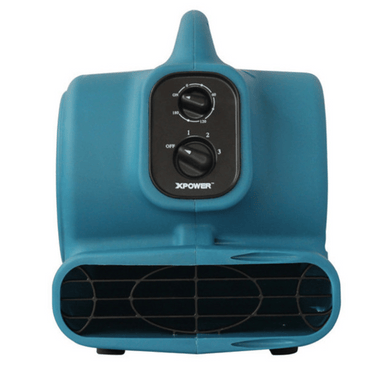
Air movers are the workhorses of water damage restoration — but they're just as useful after carpet cleaning, in humid storage areas, or anywhere you need to shift large volumes of air quickly. We stock a full range from XPOWER, covering compact units for tight spaces through to powerful axial fans for large area drying — from single room jobs to full commercial restoration projects.

Lightweight, stackable, and energy efficient — built for Australian restoration contractors, cleaning professionals, and facility maintenance teams who need reliable drying performance. Fast dispatch Australia-wide.

Commercial Air Movers and Carpet Dryers — Choosing the Right Unit for Your Application

Air movers look simple but the differences between models matter significantly when you're running multiple units across a restoration job or drying a large commercial facility. The key specifications to compare are airflow volume, amp draw, and form factor — and how those three things interact with your specific application.

Centrifugal vs Axial Air Movers

The two main types of air movers serve different purposes and understanding the difference saves you from buying the wrong machine for your workload.

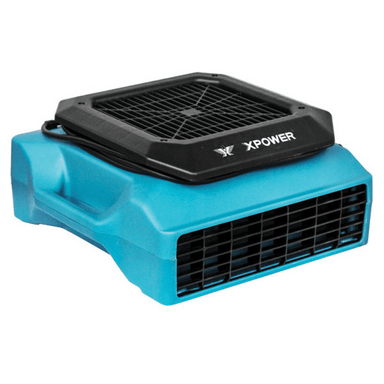
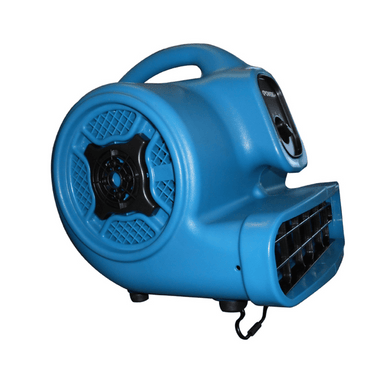
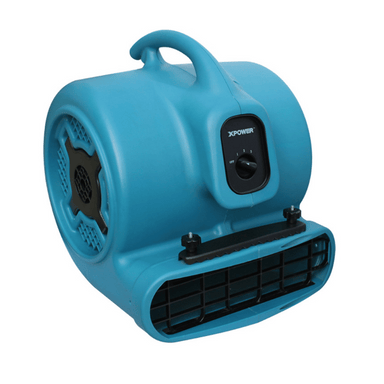
Centrifugal air movers are the restoration industry standard for carpet and structural drying. They produce a focused, high-velocity airflow directed at a low angle — designed to push air under carpet, into wall cavities, and across damp surfaces at the precise angle needed to maximise evaporation. They're compact, stackable, and typically draw low enough amperage to run multiple units from a single circuit. Most professional restoration setups use centrifugal units as the primary drying tool.

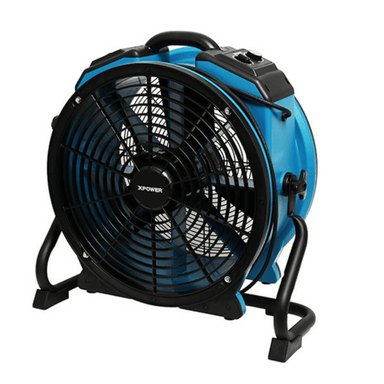
Axial air movers — essentially high-performance fans — produce a wider airflow spread suited to large open areas. They move large volumes of air across broad surfaces like warehouse floors, open commercial spaces, and large drying areas where a focused centrifugal airflow isn't necessary. If you're drying a large floor area rather than directing airflow under carpet or into cavities, an axial unit covers more ground per machine.

Amperage and Daisy-Chaining

On a restoration job, you're typically running multiple air movers simultaneously. Low amp draw per unit is what allows you to daisy-chain several machines from a single power outlet — a critical practical feature that determines how many units you can run in a room without tripping circuits or running extension cords everywhere. Most professional centrifugal air movers draw 1.5–2.5 amps per unit, allowing four to six machines from a standard 10-amp circuit. Check the amp draw specification before purchasing if running multiple units is part of your workflow.

Stacking and Storage

Restoration contractors running fleets of air movers need machines that stack cleanly for van storage and site transport. Units that don't stack add significant storage and transport cost over time. The XPOWER range is designed for stackable storage — important when you're loading and unloading equipment at multiple sites across a working day.

How Many Air Movers Do I Need?

A practical starting guide for carpet drying is two to four air movers per average-sized room — around 20 to 30 square metres — adjusted for carpet thickness, saturation level, and room airflow. Air movers should be paired with at least one dehumidifier per two to three units to capture the moisture they lift into the air. Running air movers without dehumidification just moves moisture around the room rather than removing it from the environment.

Not sure which air mover configuration suits your typical job size? Give us a call on 1300 404 226 — we're happy to help you spec the right setup before you order.

Frequently Asked Questions — Commercial Air Movers

What is the difference between a centrifugal and axial air mover?

Centrifugal air movers produce a focused, high-velocity airflow at a low angle — designed for directing air under carpet, into wall cavities, and across damp surfaces in restoration work. They're compact, stackable, and low amp draw for multi-unit daisy-chaining. Axial air movers produce a wider airflow spread suited to drying large open areas like warehouse floors and commercial spaces. For most carpet drying and restoration work, centrifugal units are the right choice. For large open area drying where broad coverage matters more than directed airflow, axial units are more effective.

How many air movers do I need per room?

A practical guide is two to four air movers per average-sized room of around 20 to 30 square metres. Adjust up for thicker carpet, higher saturation levels, or rooms with limited natural airflow. Position units to create cross-flow ventilation — angled to push moisture off the carpet surface and into the air rather than simply blowing across it. For underlay drying, lift carpet sections and direct air movers underneath at low angles. Always pair air movers with dehumidification — running air movers alone moves moisture around the room without removing it from the environment.

Can I daisy-chain multiple air movers from one power outlet?

Yes — most professional centrifugal air movers are specifically designed for daisy-chaining, with power pass-through outlets built into the machine. The number of units you can safely run from a single circuit depends on each unit's amp draw and your circuit's amperage. A standard 10-amp circuit can typically run four to six units drawing 1.5–2 amps each. Check the amp draw specification on the specific model before purchasing if multi-unit daisy-chaining is part of your workflow. Never exceed the circuit's rated amperage.

Do air movers need to be used with a dehumidifier?

For professional restoration work, yes. Air movers lift moisture from damp surfaces into the air — but without a dehumidifier running simultaneously, that moisture resettles on other surfaces rather than being removed from the environment. Running air movers without dehumidification extends drying time significantly and risks moisture migrating to adjacent areas. The standard setup is one LGR dehumidifier per two to three air movers. For post-carpet-cleaning drying in well-ventilated spaces, air movers alone may be sufficient if there's adequate natural airflow to carry moisture out of the room.

How long does it take to dry carpet with air movers?

With air movers and a dehumidifier running together, most carpet drying jobs take between 24 and 72 hours depending on saturation level, carpet and underlay type, and ambient conditions. Heavily saturated underlay takes longer than surface-level carpet wetting. Maintaining room temperature between 20 and 27 degrees Celsius improves evaporation rate and dehumidifier efficiency. Use a moisture meter to confirm carpet and underlay are genuinely dry before packing up equipment — touch alone is not a reliable indicator.

Can air movers be used for applications other than water damage restoration?

Yes — air movers are widely used beyond restoration work. Common applications include post-carpet-cleaning drying where you want to speed up drying time before the space is back in use, drying freshly mopped or scrubbed commercial floors, ventilating humid storage areas and cool rooms, construction drying where new concrete or plaster needs controlled drying conditions, and general air circulation in facilities without adequate natural ventilation. The low amp draw and stackable design make them practical for a wide range of commercial and industrial drying applications.

What should I look for when comparing air mover models?

The four key specifications to compare are airflow volume in CFM or m³/hr — the more air moved per minute the faster drying progresses; amp draw — lower draw allows more units per circuit; speed settings — multiple speeds give flexibility across different applications and help manage noise in occupied spaces; and stackability — units that stack cleanly reduce storage and transport costs significantly for contractors running fleets of machines. Build quality and warranty coverage are worth checking too — machines used daily on restoration sites take significant physical punishment.


Aussie Wide Shipping

Fast and competitive

Lifetime Support

Product lifetime support

Spare Parts

We source spare parts

Buying in Bulk?

Request a quote