

Save $249.00
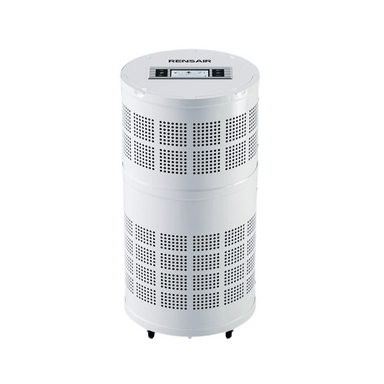
Rensair Q01B Hospital Grade HEPA Air Purifier
Clean air isn't a luxury — it's a necessity in shared indoor environments. The RENSAIR Q01B combines hospital-grade H13 HEPA filtration with a buil...
View full detailsRensair air purifiers use a dual-stage system that captures and destroys airborne contaminants rather than just filtering them. The medical-grade H14 HEPA filter — certified to EN1822, the European standard for HEPA filtration — captures 99.995% of particles down to 0.3 microns, while integrated UV-C light neutralises trapped pathogens to prevent recirculation. Ozone-free and designed for continuous operation, they run quietly enough for occupied spaces including hospital wards, aged care facilities, classrooms, and offices. We stock Rensair at Oz Cleaning Gear with fast dispatch across Australia — give us a call if you need help matching the right unit to your room size or airflow requirements.
Save $249.00
Clean air isn't a luxury — it's a necessity in shared indoor environments. The RENSAIR Q01B combines hospital-grade H13 HEPA filtration with a buil...
View full details
Save $-899.00
Keep your Rensair Air Purifier operating at full efficiency with the Rensair HEPA Filter and UVC Lamp Set. This genuine replacement kit includes bo...
View full detailsTwo products — the Q01B unit and the genuine replacement HEPA filter and UVC lamp set. That's intentional. Rensair doesn't try to be everything — they've built one machine and refined it to a standard that meets the most demanding air quality requirements in commercial and healthcare environments.
The Q01B uses a dual-stage purification system that goes beyond standard HEPA filtration. Stage one is a cylindrical H14 HEPA filter certified to EN1822 — the European standard that defines H14 as capturing 99.995% of airborne particles at 0.3 microns, including viruses, bacteria, fine dust, allergens, and mould spores. H14 is the highest HEPA classification under EN1822, used in hospital operating theatres, pharmaceutical clean rooms, and laboratories where the strictest filtration is a compliance requirement. Stage two is an integrated UV-C germicidal lamp that neutralises pathogens trapped on the filter surface, preventing the build-up of live biological material and reducing the risk of secondary contamination when filters are changed. The system is ozone-free — no harmful byproducts produced during operation.
The cylindrical filter design increases surface area compared to flat panel filters at the same external unit size — more filter media means higher airflow capacity at lower fan speeds, which is why the Q01B operates quietly enough for continuous use in occupied spaces. Fan speed is adjustable; at lower settings it's appropriate for occupied wards, classrooms, and open offices without disrupting the environment.
The Q01B is positioned at the healthcare and high-risk commercial end of the air purifier market — not a general-purpose office unit, but the correct specification for environments where airborne pathogen control is a genuine requirement:
Healthcare facilities — hospital wards, GP clinics, dental surgeries, allied health practices — where infection control and cross-contamination prevention are operational priorities. Aged care facilities where residents are immunocompromised and respiratory infections spread rapidly through shared spaces. Schools and childcare centres during high-risk infectious disease periods. Pharmacies and healthcare retail environments. Commercial offices managing post-COVID air quality commitments to staff. Any enclosed commercial space where the density of occupants and the sensitivity of the population make airborne pathogen control a justified operational requirement.
The genuine Rensair replacement set ($899) includes both the H14 HEPA filter and the UV-C lamp — the two consumable components of the Q01B system. Rensair recommends annual replacement of both components to maintain filtration performance and UV-C germicidal effectiveness. Using genuine Rensair replacement parts maintains the EN1822-certified H14 HEPA specification and ensures the UV-C output remains within the specification required for pathogen neutralisation. Third-party filters in this category frequently fail to meet the H14 standard they claim — with hospital-grade equipment, genuine parts are the only way to be certain of the EN1822 performance standard.
Three things: H14 HEPA filtration certified to EN1822 (capturing 99.995% of particles at 0.3 microns — the highest classification under the European HEPA standard), integrated UV-C germicidal technology that neutralises pathogens trapped on the filter, and continuous-duty design for occupied spaces. H14 under EN1822 is the filtration standard used in hospital operating theatres and pharmaceutical clean rooms. Most commercial air purifiers use H13 HEPA at best — H14 is ten times more efficient at the critical 0.3 micron particle size where viruses and fine biological aerosols sit. The UV-C stage adds an additional layer of pathogen control that standard HEPA-only units don't provide.
The Q01B is rated for rooms up to approximately 75m² at five air changes per hour — the recommended minimum for healthcare infection control environments. For smaller rooms, the unit achieves higher air change rates, which improves pathogen removal performance. For larger open spaces or rooms with high ceilings, multiple units positioned strategically deliver better air change rates than a single unit at maximum fan speed. Give us a call with your room dimensions and we can calculate the right number of units for your required air change rate.
Yes — aged care is one of the primary applications for the Q01B. Aged care residents are typically immunocompromised, and communal dining rooms, activity rooms, and shared living spaces present high infection transmission risk. The Q01B's EN1822-certified H14 HEPA filtration combined with UV-C treatment provides the highest available standard of airborne pathogen control in a quiet, portable unit suitable for continuous operation in occupied spaces. Running a Q01B continuously in high-risk communal areas is a practical, low-disruption infection control measure.
Rensair recommends annual replacement of both the H14 HEPA filter and the UV-C lamp for units running continuously. In higher-contamination environments or where the unit runs at higher fan speeds, more frequent replacement may be appropriate. The replacement set ($899) includes both components. Replacing both together ensures the UV-C lamp output remains within the germicidal specification — UV-C lamps degrade over time and reduced output directly impacts pathogen neutralisation performance. Using genuine Rensair parts maintains EN1822 H14 certification on the replacement filter.
No — the Rensair Q01B is ozone-free. The UV-C lamp operates at a germicidal wavelength that neutralises pathogens without producing ozone as a byproduct. This is an important specification for occupied spaces — ozone-generating air purifiers are not appropriate for continuous use in rooms with people present. The Q01B is specifically designed for continuous operation in occupied healthcare environments.
Standard commercial air purifiers typically use H13 HEPA filtration without UV-C treatment — adequate for general office air quality and allergen reduction, but not the correct specification for healthcare-grade pathogen control. The Q01B adds EN1822-certified H14 filtration (ten times more efficient than H13 at 0.3 microns) and UV-C germicidal treatment that standard units don't have. For environments where airborne pathogen control is a genuine requirement — healthcare, aged care, high-risk commercial spaces — the Q01B is the correct specification. For general commercial air quality improvement in standard offices, a standard H13 unit is adequate and significantly cheaper.
Fast and competitive
Product lifetime support
We source spare parts
Request a quote