
CALL US TODAY FOR BEST PRICES, FAST QUOTES AND GREAT DISCOUNTS: 1300 404 226
CALL FOR BEST PRICES: 1300 404 226
Skip to content

Filters

Commercial Wet and Dry Vacuums

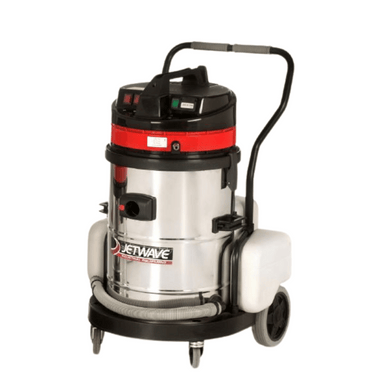
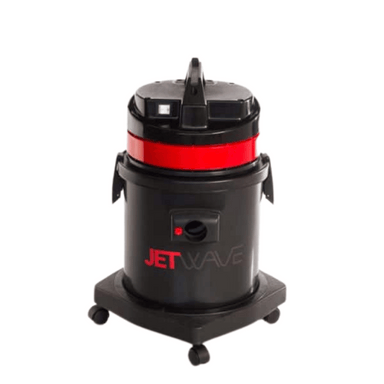
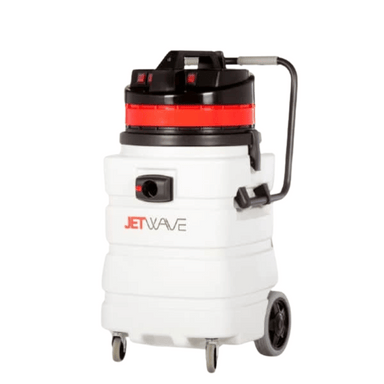
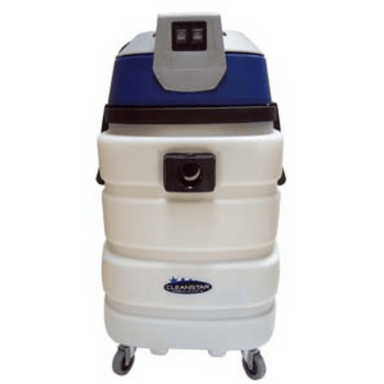
Wet and dry vacuums handle the jobs that single-mode machines can't — switching between liquid spills, sludge, fine dust, and solid debris without changing equipment. It's what makes them a staple on construction sites, in workshops, warehouses, hospitality venues, and contract cleaning operations. We stock commercial and industrial wet and dry vacuums from Cleanstar, Lavorwash, Ghibli, Jetwave and Tennant with fast dispatch across Australia. Give us a call if you need help matching tank capacity and suction rating to your application.

How to Choose the Right Wet and Dry Vacuum for Your Application

Tank capacity and motor configuration are the two main decisions. Get those right and everything else — filtration, accessories, build material — falls into place around the application.

Tank Capacity

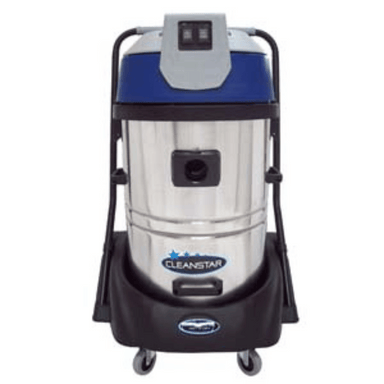
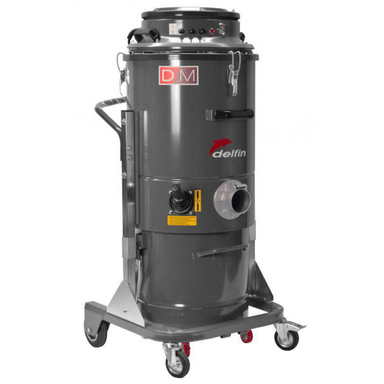
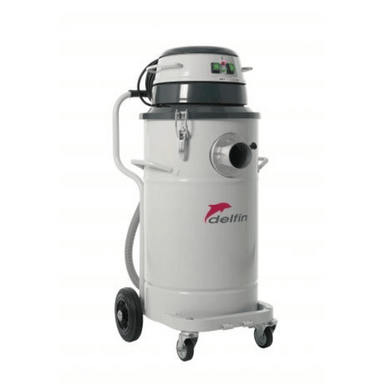
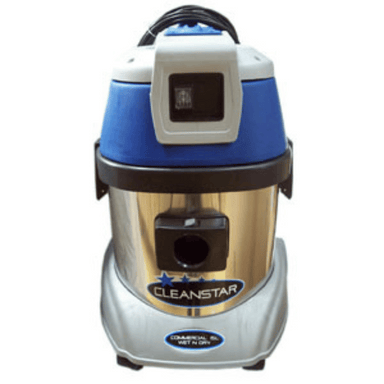
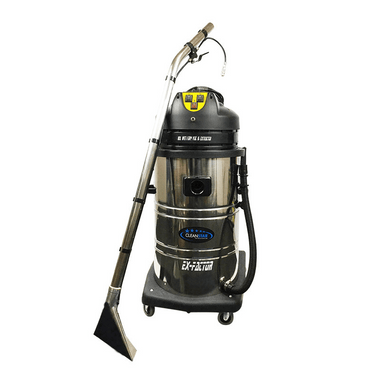
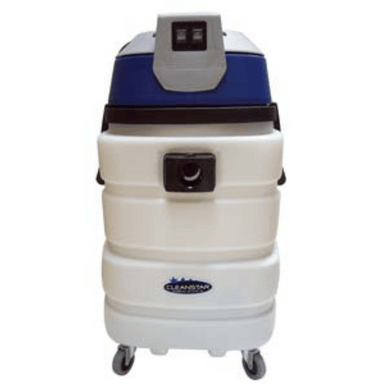
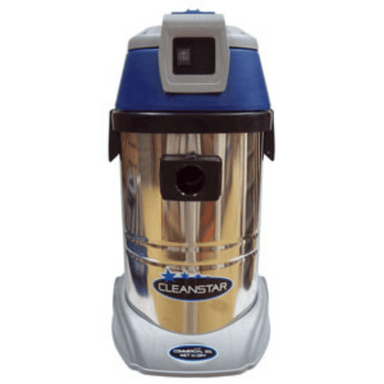
For light commercial use — hospitality, retail, small workshops — a 15 to 30 litre tank is enough for daily use without constant emptying. The Cleanstar VC15L and VC30L sit in this range. For heavy commercial and construction applications where liquid volumes are higher, 60 to 90 litres is the practical choice. The Cleanstar VC60L, VC90LP, and VC90LP-3M handle that workload. The Cleanstar EX-FACTOR at 80 litres adds extraction capability suited to carpet and upholstery spill recovery. For industrial-scale liquid extraction, the Delfin DM3 EL and MTL802WD move into a different category — steel construction, continuous duty rating, and multi-stage filtration.

Single Motor vs Multi-Motor

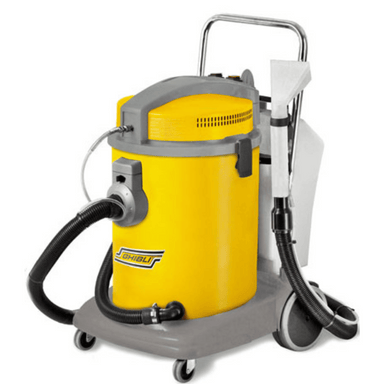
Single motor units are cost-effective and appropriate for standard commercial cleaning tasks. Multi-motor units deliver higher airflow and suction — important when the tank is large and needs to maintain extraction performance as it fills, or when the application involves heavy liquid volumes or dense debris. The Cleanstar VC90LP-3M runs three motors for exactly this reason. For Ghibli models, the V-M9P adds extraction-specific performance suited to water damage and flooding scenarios where rapid liquid recovery matters.

Stainless Steel vs Plastic Tank

Stainless steel tanks handle solvents, harsh chemicals, and abrasive materials that would degrade plastic over time. The Cleanstar stainless range (VC15L, VC30L, VC60L) is the right choice for workshops, automotive, and industrial environments where the contents aren't always clean water. Plastic tanks are lighter, lower in cost, and perfectly adequate for standard commercial cleaning applications where liquid is primarily water and cleaning solution.

Brands in the Range

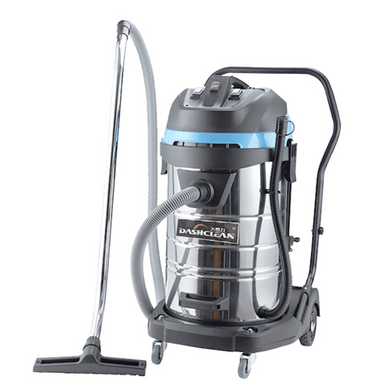
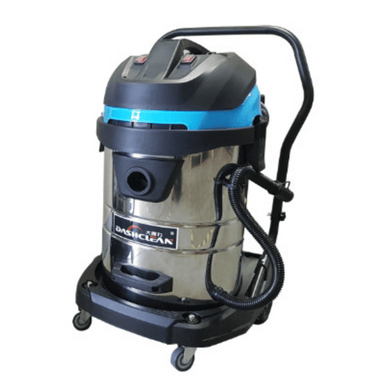
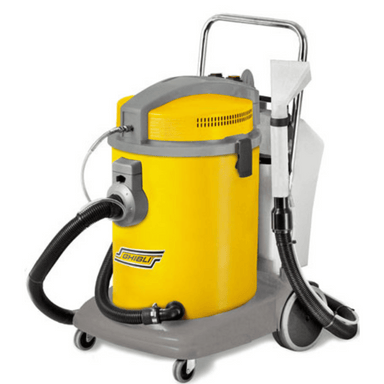
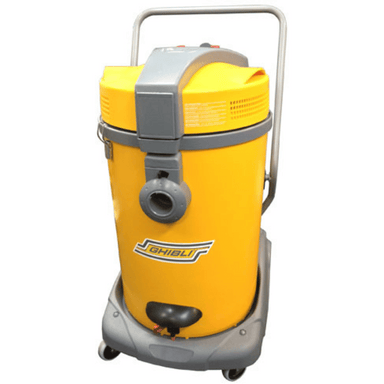
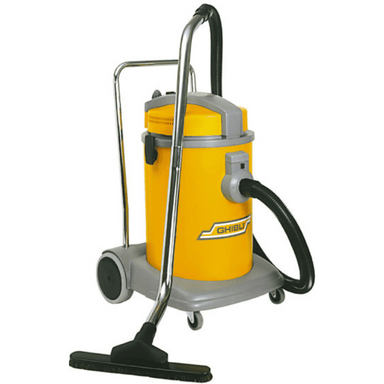
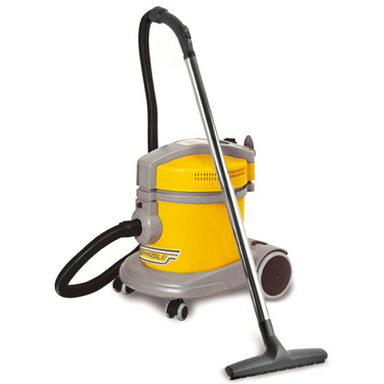
Cleanstar covers the broadest range from compact 15L through to 90L three-motor units — reliable, well-supported, and available at competitive price points for everyday commercial use. Dashclean's B200 and B300 are entry-level industrial options suited to construction sites and general workshop use. Ghibli wet and dry vacuums are European-engineered with a focus on build quality and longevity — the V-M9P in particular is a capable extraction machine for water damage and restoration work. Tennant's VWD range (VWD27, VWD62, VWD72) suits facilities already running Tennant floor equipment who want consistent brand and service. Lavorwash adds further European options across mid-range capacity. Delfin models are genuine industrial machines — steel-bodied, continuous duty, available in single and three-phase configurations.

Frequently Asked Questions — Wet and Dry Vacuums

What is a wet and dry vacuum used for?

Wet and dry vacuums pick up both liquid and dry material — water, slurry, dust, fine debris, and solid waste — without needing a dedicated machine for each. Common applications include construction site cleanup, workshop spills, hospitality venue cleaning, water damage recovery, automotive detailing, and general commercial maintenance. The float valve inside the tank shuts off suction automatically when the tank is full of liquid, preventing motor damage.

What size tank do I need?

Match tank size to how much material you're picking up per session and how often you're prepared to empty. For light commercial cleaning — cafés, small retail, office maintenance — a 15 to 30 litre tank handles daily tasks without constant interruption. For construction sites, warehouses, and venues dealing with significant liquid or debris volumes, 60 to 90 litres reduces downtime. If you're doing water damage recovery or large-volume liquid extraction, look at the Ghibli V-M9P or Cleanstar EX-FACTOR specifically — they're configured for that type of work.

Can I use a wet and dry vacuum for water damage recovery?

Yes — for rapid liquid recovery from flooring, carpet, and hard surfaces, a wet and dry vacuum is the right tool. For serious water damage work, look at models with larger tank capacity and higher airflow. The Ghibli V-M9P and the Cleanstar EX-FACTOR are the models in our range best suited to extraction-focused applications. If the volume is significant or the job is recurring, pair the vacuum with air movers and a dehumidifier for full drying coverage.

Do wet and dry vacuums have HEPA filtration?

Some do, most don't as standard. Wet and dry vacuums typically use a foam sleeve filter and a cartridge or bag filter for dry use. HEPA filtration in this category is less common than in dedicated dry vacuums because the filtration media needs to handle moisture without degrading. If fine dust capture is a specific requirement alongside liquid pickup — silica dust on a construction site, for example — confirm the filtration specification with us before ordering. The Delfin industrial range has multi-stage filtration options including HEPA where that standard is required.

What is the difference between a commercial and an industrial wet and dry vacuum?

Commercial wet and dry vacuums — the Cleanstar, Ghibli, and Tennant models in our range — are built for frequent daily use in standard cleaning environments. They handle water, general debris, and light construction mess well. Industrial vacuums like the Delfin DM3 EL and MTL802WD are built for continuous operation in demanding environments — steel construction, rated duty cycles, three-phase power options, and filtration specifications that meet WHS requirements for hazardous materials. If your application involves regulated substances, continuous shifts, or materials that would damage a standard commercial machine, the Delfin range is the correct specification.


Aussie Wide Shipping

Fast and competitive

Lifetime Support

Product lifetime support

Spare Parts

We source spare parts

Buying in Bulk?

Request a quote