
CALL US TODAY FOR BEST PRICES, FAST QUOTES AND GREAT DISCOUNTS: 1300 404 226
CALL FOR BEST PRICES: 1300 404 226
Skip to content

Filters

Electric Pressure Washers

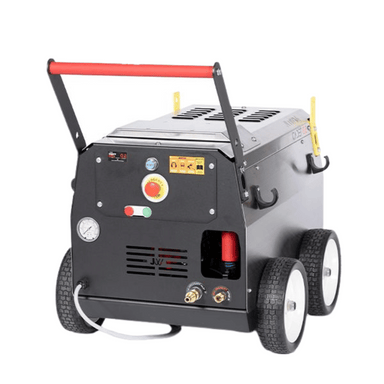
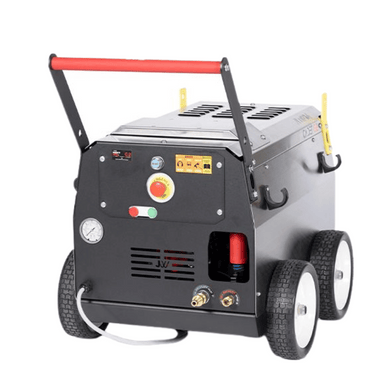
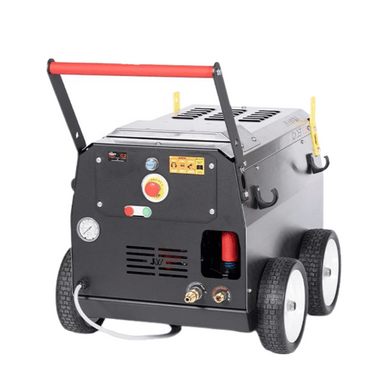
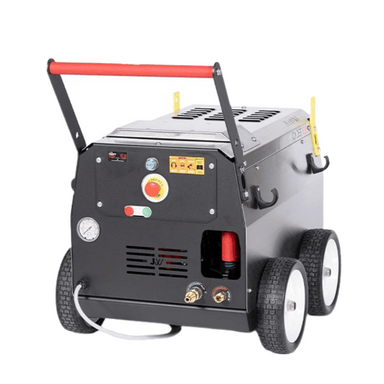
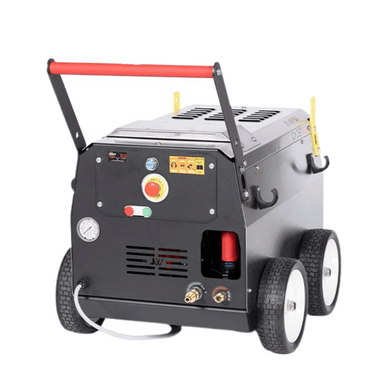
An electric pressure washer runs quiet, produces no exhaust, and starts with a switch. That combination is why it's the default for indoor wash bays, food handling areas, workshops and fixed installations — anywhere an engine's fumes and noise rule it out before the specification is even discussed.

The range covers cold water and hot water models in single phase and three phase, from portable trolley units through to wall mounted machines built into the facility. Not sure what your supply will carry? Give us a call on 1300 404 226 and we'll work it out before you order.

Which electric pressure washer suits your site?

Electric narrows to three decisions: what your power supply can actually deliver, whether the work needs heat, and whether the machine moves around or stays put. Supply comes first, because it rules out more of the range than anything else.

Single phase or three phase

Single phase runs on a standard 240V outlet. It covers light and mid-range commercial work, and it means the machine can be plugged in anywhere without an electrician. The ceiling is real though — a 10 or 15 amp circuit only carries so much motor, which caps the pressure and flow available.

Three phase lifts that ceiling. Higher output, sustained without heat build-up, which is what continuous shift work demands. The trade-off is that the supply has to exist and the machine effectively stays where the supply is. Have a licensed electrician confirm what you've got before ordering — it's the one specification you can't work around after delivery.

  • Single phase machines plug into a standard outlet so the unit moves between areas without an electrician or a dedicated circuit.
  • Three phase machines hold full output across long runs so continuous shift washing doesn't lose pressure as the motor heats.

Cold water or hot water electric

Cold water handles general commercial cleaning — dirt, dust, surface grime, concrete, vehicle washing. Simpler machine, lower cost, less to service.

Hot water is the specification when contamination is organic. Grease, oil, fats, proteins and biological residue break down chemically under heat in a way pressure alone cannot, which is why food processing, commercial kitchens and workshop plant cleaning specify it as standard rather than as an upgrade.

Portable or wall mounted

Portable trolley units move between areas and jobs, which suits workshops and sites where the work isn't in one place. Wall mounted machines are built into the facility — fixed plumbing, fixed power, hose reel on the wall, nothing to wheel out or put away. For a wash bay that runs every day, a fixed installation removes the setup and pack-down time entirely, and the machine stays out of the way of the work.

Pressure and flow rate

Pressure breaks the bond, flow carries the mess away. Electric machines generally sit lower on both than petrol or diesel equivalents, because the motor is working within a supply limit rather than an engine's output. That's not a weakness — it's a match to the work. Wash bay and indoor cleaning rarely needs 5000 PSI, and the specification that matters more is whether the machine holds its output for the length of a shift.

  • Higher flow rinses a wider area per pass so large floors and vehicle washing finish in fewer passes.
  • Higher pressure cuts into bonded deposits so plant and machinery cleaning breaks loose without extra chemical.
  • Induction motors run cooler and slower than universal motors so the machine survives daily use rather than burning out inside a year.

Electric, petrol or diesel

Electric wins wherever power is available and fumes are a problem — indoor wash bays, food handling, workshops, fixed installations. Running costs are lower than petrol and there's no fuel to store or engine to service. Where it stops working is anywhere without reliable supply. Petrol pressure washers go wherever the work is with no outlet needed, which is why they dominate mobile and remote work. Diesel pressure washers deliver sustained torque and lower running costs at volume for long continuous shifts on remote sites.

Frequently asked questions

Do I need three phase power?

Only for the higher-output machines. Many commercial electric units run on single phase 240V and cover general commercial work comfortably. Three phase is needed where you want sustained high output across continuous shifts. Have a licensed electrician confirm your supply before ordering — it's not something you can work around after delivery.

Are electric pressure washers powerful enough for commercial work?

Yes, for the work they're chosen for. Wash bay cleaning, vehicle washing, food processing and workshop use don't need the pressure a mining site does. Where you need maximum output away from a supply, petrol or diesel is the right call — that's a power access decision, not a performance one.

Why choose electric over petrol?

No exhaust, less noise, lower running costs, no fuel to store and no engine to service. In an enclosed wash bay or a food handling area, an engine isn't an option regardless of its specification. If the supply is there, electric is usually the better machine.

Should I choose a wall mounted or a portable unit?

Wall mounted suits a wash bay that runs daily in the same spot — fixed power, fixed plumbing, nothing to set up or pack away. Portable suits work that moves around a site. If the machine will live in one place, a fixed installation is the more practical answer.

What's the difference between an induction and a universal motor?

Induction motors run slower and cooler with fewer wearing parts, which is why commercial machines use them and why they last under daily operation. Universal motors are lighter and cheaper but run hot and wear fast. Under daily commercial use, the motor type matters more than the headline pressure figure.

Related categories

Further reading

Aussie Wide Shipping

Fast and competitive

Lifetime Support

Product lifetime support

Spare Parts

We source spare parts

Buying in Bulk?

Request a quote