
Save $301.00
JSP Powercap Infinity HEPA Full Face Respirator
If your workers are exposed to silica dust, asbestos, or fine airborne particulates, the JSP PowerCap Infinity is worth serious consideration. It's...
View full detailsMould removal done properly requires more than a spray bottle and a scrubbing brush. Professional mould remediation involves containment, HEPA air filtration, controlled demolition of affected materials, surface treatment, and post-remediation verification. We stock the full range of professional mould remediation equipment — HEPA air scrubbers, dehumidifiers, wet and dry vacuums, fogging units, PPE, and carpet extraction machines — used by restoration contractors, property maintenance teams, and commercial cleaning operators across Australia. Not sure what equipment suits your job size or contamination level? Give us a call before you order.
Save $301.00
If your workers are exposed to silica dust, asbestos, or fine airborne particulates, the JSP PowerCap Infinity is worth serious consideration. It's...
View full details
Save $-14.05
Protect yourself and your team with Cleanstar KN95 Disposable Face Masks, designed to deliver reliable filtration with exceptional comfort for exte...
View full details
Save $-5,400.00
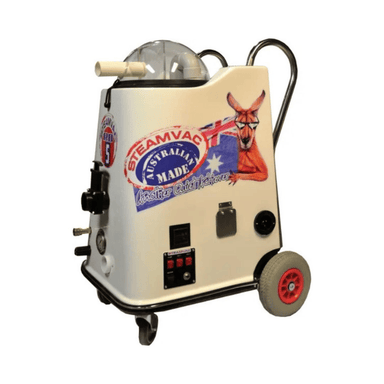
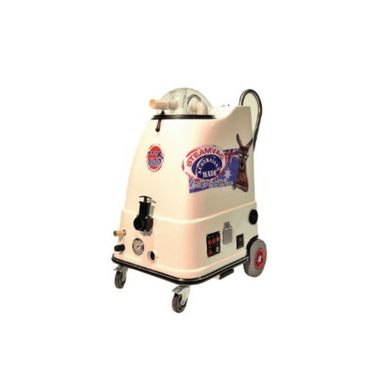
SteamVac Max 600 Plus – High-Performance 600 PSI Carpet Extractor The SteamVac Max 600 Plus is a heavy-duty professional carpet and upholstery clea...
View full details
Save $-5,800.00
Steamvac RD6 Steam Cleaner – Australian-Built Power and Reliability The Steamvac RD6 Steam Cleaner is built for serious professionals who demand re...
View full details
Save $404.00
If you’re looking for a professional-grade steam cleaner built to last, the Steamvac RD5 Steam Cleaner delivers unmatched reliability, power, and p...
View full details
Save $-6,499.00
The Steamvac Apollo HP 1600 Steam Cleaner is built for professionals who demand performance, reliability, and results. Proudly Australian-made, thi...
View full details
Save $100.00
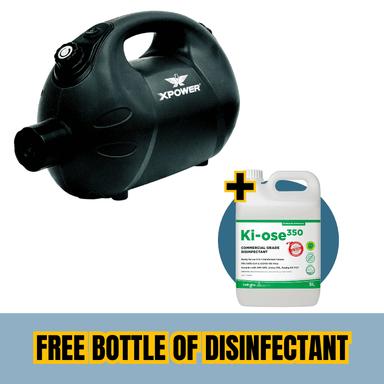
Tackle germs, odours, and pests in hard-to-reach places with the XPOWER F16B ULV Cold Fogger – a professional-grade, cordless fogging machine desi...
View full details
Save $283.20
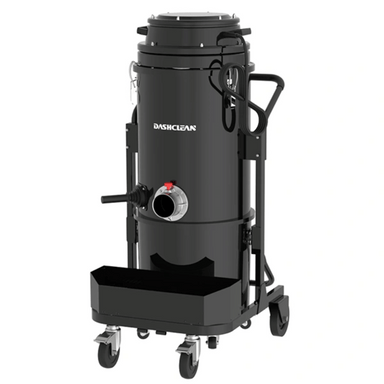
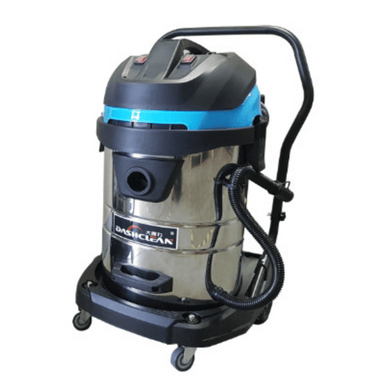
Dashclean S3 S313 Single-Phase Industrial Vacuum Cleaner Heavy-Duty Cleaning, Made Easy for Australian Industries. If you're constantly battling p...
View full details
Save $300.00
The Dashclean S23 Industrial Vacuum Cleaner is designed for professionals who need a compact, tough, and reliable vacuum for dry debris in Australi...
View full details
Save $150.00
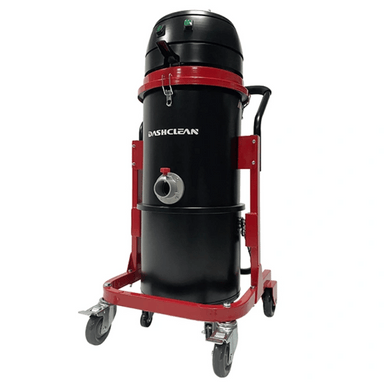
Dashclean B200 Wet & Dry Industrial Vacuum Cleaner – 70L Single Phase The Dashclean B200 is a high-capacity wet & dry industrial vacuum cl...
View full details
Save $-5,999.00
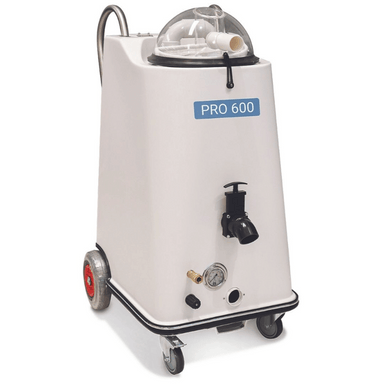
The Surevac Carpet Extractor Pro600 Kit is purpose-built for professionals who demand durability, versatility, and reliable performance. Designed w...
View full details
Save $201.00
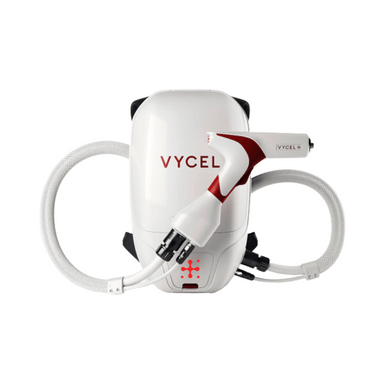
The Vycel 4 Electrostatic Sprayer delivers advanced disinfection performance tailored to the demands of Australian workplaces, schools, healthcare,...
View full detailsMould remediation follows a defined sequence of stages. The equipment required at each stage is different, and skipping any stage — particularly air filtration and post-treatment verification — is how mould problems come back weeks after the job is done. Here's how the equipment maps to each stage.
Before any mould is disturbed, the work area needs to be contained to prevent spore dispersal into unaffected areas. Negative air pressure using an air scrubber with HEPA filtration creates outward airflow that draws spores into the filter rather than allowing them to migrate. Respiratory protection is non-negotiable — a minimum of a P2 respirator for low-level mould, and a powered air purifying respirator (PAPR) with HEPA filtration for extensive mould contamination, confined spaces, or any work where spore counts are high. The JSP Powercap Infinity in our range provides TH3-rated PAPR protection to AS/NZS 1716 — the appropriate specification for professional remediation work.
Air scrubbers run continuously throughout the remediation work, capturing airborne mould spores as they're disturbed by demolition and surface cleaning. The XPOWER X-3400 ($1,799) is the standard-spec HEPA air scrubber for most commercial remediation jobs. The XPOWER AP2000 ($3,750) handles larger spaces where a single X-3400 won't achieve adequate air changes per hour. Both use HEPA filtration that captures mould spores at the sizes where they cause health effects — 2 to 10 microns for most common mould species, well within the 0.3 micron HEPA capture specification. Run the air scrubber for the duration of the job plus a minimum of two hours after work is complete to capture residual airborne spores.
Mould requires moisture to survive and regenerate. After affected materials are removed or treated, moisture must be driven out of the remaining structure — wall cavities, subfloor, structural timber — or mould will return. Dehumidifiers extract moisture from the air as evaporation occurs, driving the drying of structural materials. The Thorair 50L, 70L, and 90L commercial dehumidifiers cover small to large commercial spaces. The XPOWER 85L LGR dehumidifier is the more capable option for serious structural drying — LGR technology continues extracting moisture efficiently at lower humidity levels where standard refrigerant dehumidifiers lose performance.
For carpet and upholstery affected by water that has contributed to mould growth, carpet extraction machines remove liquid from the fabric and underlay before surface treatment. The Cleanstar Cutlass, Cleanstar EX-FACTOR, and Steamvac range in this collection cover extraction from spot cleaning through to full room carpet recovery.
After physical removal of mould-affected material and drying of the structure, antimicrobial treatment is applied to remaining surfaces to kill residual mould spores and inhibit regrowth. ULV fogging distributes antimicrobial solution across large areas efficiently. The XPOWER F16B Battery Powered ULV Cold Fogger applies treatment without power outlet dependency — practical in spaces with limited outlet access during active remediation. For targeted surface application, the Vycel electrostatic sprayer (where available) improves surface adhesion of treatment solutions on irregular surfaces.
Once remediation is complete, maintaining air quality prevents recontamination. The Rensair Q01B H14 HEPA air purifier with UV-C treatment is the correct ongoing solution for occupied spaces where air quality is a continued requirement — healthcare facilities, aged care, and any commercial space where mould history creates ongoing air quality obligations to occupants. Unlike air scrubbers that are portable job-site tools, the Rensair Q01B is designed for permanent placement in occupied spaces.
Where mould contamination involves regulated materials or the job scale requires continuous extraction performance, Delfin industrial vacuums with HEPA filtration are the correct specification. The DM3 EL and MTL802WD in this collection handle large volumes of contaminated material with sealed filtration systems that prevent re-release during filter changes — a critical requirement when the captured material contains viable mould spores.
High-temperature steam kills mould on non-porous surfaces without chemicals — effective on tiles, grout, bathroom fixtures, and hard flooring where surface mould growth is the primary issue. The Steamvac Max 220 and SteamVac Avenger HP 1600 in this collection operate at temperatures above 100°C, which is lethal to mould organisms on contact. Steam cleaning is not a substitute for physical removal of mould-affected porous materials like plasterboard, insulation, and timber — it's a surface treatment for hard non-porous surfaces where mould growth is superficial.
A complete professional mould remediation kit covers five categories: respiratory PPE (minimum P2, preferably PAPR with HEPA filtration for extensive mould), a HEPA air scrubber running continuously during the work, a dehumidifier for structural drying, a ULV fogger or electrostatic sprayer for antimicrobial treatment, and a wet and dry vacuum or carpet extractor for liquid extraction from affected materials. The specific models depend on the job size and contamination level. Give us a call with your job details and we'll spec the right combination before you order.
The Australian standard for mould remediation recommends a minimum of four to six air changes per hour in the containment area during active remediation work. Calculate the air volume of the containment area (length × width × ceiling height in cubic metres) and match it to the CFM or m³/h output of the air scrubber at the required air change rate. For most standard room sizes, one XPOWER X-3400 is adequate. For larger spaces — open-plan commercial areas, large residential rooms with high ceilings — the AP2000 or multiple X-3400 units are required. Give us a call with your room dimensions and we'll work out the right configuration.
Mould returns after remediation when the underlying moisture source hasn't been resolved, when structural drying was inadequate, or when airborne spore counts weren't reduced to acceptable levels before the space was closed up. Getting post-remediation structural moisture content to below 16–19% (depending on material type) using a dehumidifier is the critical step most DIY and underprepared professional jobs skip. If the moisture is still in the wall, floor, or ceiling structure, mould regrowth is a matter of weeks.
Steam cleaning kills mould on non-porous surfaces — tiles, grout, glass, and hard flooring — where the steam can make direct contact with the organism at temperatures above 100°C. It is not effective for mould inside porous materials like plasterboard, timber, insulation, or carpet underlay, where the mould grows through the material rather than on the surface. For porous materials, physical removal and replacement is the correct approach. Steam cleaning is a useful supplementary treatment for hard surfaces after the affected porous material has been removed.
Mould remediation itself does not require a specific licence in Australia at the time of writing — however, if the work involves demolition of building elements, electrical work, or plumbing, those activities require licensed tradespeople. If the mould is associated with asbestos-containing materials, asbestos removal licensing applies. For commercial premises, remediation work should be documented and ideally verified by an independent assessor to meet duty of care obligations to occupants. Safe Work Australia's guidance on biological hazards in the workplace is the relevant starting point for understanding WHS obligations on commercial mould remediation jobs.
Fast and competitive
Product lifetime support
We source spare parts
Request a quote